Beneath a parked car on a busy street, a small dog lay hidden from the passing traffic. Her fur was dirty and badly matted, and one of her legs was so seriously injured that she kept it tucked close to her trembling body.
The little dog, later named Tres, barely made a sound above the noise of the street. When someone noticed her and approached, she let out a low, painful whimper. She seemed exhausted, and even the possibility of being touched made her pull away.
Her rescuer reached carefully beneath the vehicle, trying not to frighten her further. Tres was in no condition to remain there, but getting her into safe hands was only the beginning. Her injured leg needed urgent attention, and nobody yet knew whether she would survive the complications ahead.
VIDEO: Found Whimpering Beneath a Car, Injured Dog Tres Begins a Difficult Journey to Recovery
Beneath the Car Was a Dog Who Needed More Than Shelter
Tres had reportedly been abandoned by her previous owner after developing a serious medical problem that had not received the treatment she needed.
By the time she was discovered, her condition reflected a long period without adequate care.
Her thick coat had become heavily tangled and dirty, making her appearance particularly distressing. More concerning was her injured leg, which she held close to her body as she remained beneath the vehicle.
When her rescuer tried to comfort her, Tres flinched away.
There was no way to know exactly what experiences had shaped that reaction, but her response showed how uncomfortable she was with someone reaching toward her.
The rescuer approached gently and eventually managed to lift her from beneath the car.
Holding the little dog carefully, her rescuer took her for emergency veterinary care. The immediate concern was not simply finding somewhere for Tres to stay, but discovering whether the damage to her leg could be treated.
The journey to the veterinary clinic brought the first real opportunity for her condition to be assessed.
What the examination revealed would make the decision to rescue her far more complicated.
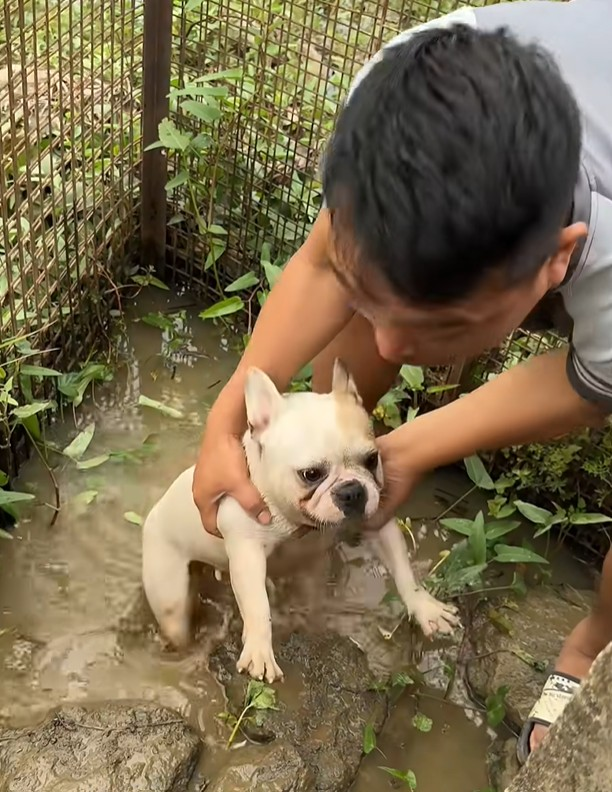
An Injured Leg Brought a Difficult Medical Decision
At the emergency veterinary clinic, the doctor examined Tres’s affected leg and identified a severe infection.
The condition was serious enough to place her survival at risk.
For her rescuer, the news was devastating. The little dog had already endured abandonment and an extended period of neglect, and now she faced the possibility that treatment might not be successful.
Surgery was considered necessary, but the procedure came with significant risks and substantial expenses.
Tres’s rescuer decided to use personal savings to pay for the treatment.
It was a major financial commitment, especially because there was no guarantee that an operation would resolve every problem affecting her health.
The decision had been shaped by the dog herself.
Despite her poor physical condition, Tres had survived long enough to be discovered, and her rescuer wanted to give her the best available opportunity for recovery.
The operation went ahead.
For a time, it seemed that the most urgent step had been taken. Tres had received medical attention, and the severe problem affecting her leg was finally being addressed.
But the weeks following surgery did not unfold as her caregiver had hoped.
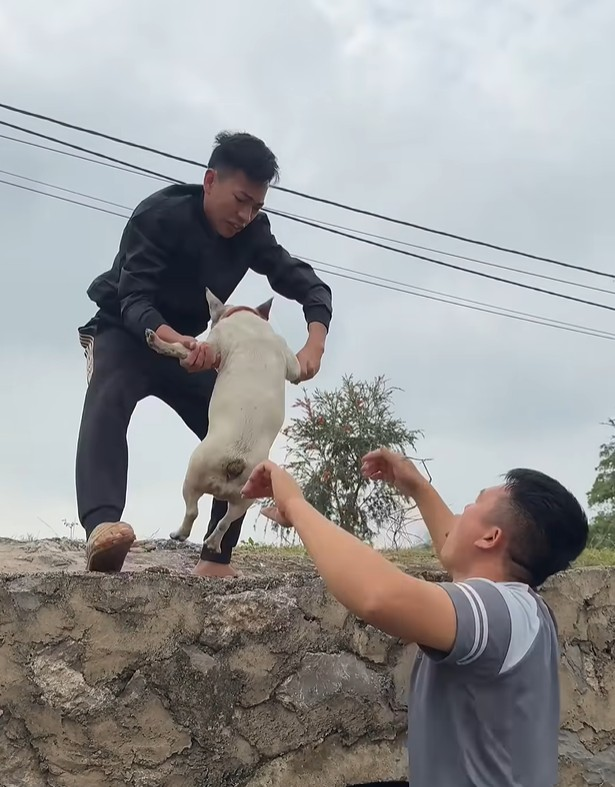
The Weeks After Surgery Were Harder Than Expected
Instead of improving quickly, Tres began experiencing further difficulties during her recovery.
Her physical condition deteriorated, leaving the veterinary team concerned that the initial treatment had not been sufficient.
The infection and the effects of her previous neglect made her situation especially difficult.
Tres spent long periods resting on her recovery bed while the medical team continued working to stabilize her condition.
For the person who had brought her in from the street, watching her struggle was deeply upsetting.
The bond between them had already grown beyond the original intention of simply helping an injured animal.
Tres had become someone her caregiver looked forward to seeing, worrying about, and eventually bringing home.
The possibility of losing her after everything she had endured was difficult to accept.
There was no sudden improvement that immediately settled those fears.
Instead, Tres needed continued treatment over many weeks. Her recovery required patience, repeated attention, and the willingness to carry on even when progress was difficult to recognize.
The difficult weeks gradually extended into months of ongoing care.
“Sometimes, the hardest part of helping an injured animal comes after the rescue, when the immediate danger has passed but recovery remains uncertain.”
For Tres, that period would become an important part of her journey.
Her caregiver continued supporting her, even without knowing when she might be well enough to return to a more ordinary life.
A Different Side of Tres Began to Emerge
Gradually, the treatments began producing encouraging results.
Tres showed signs of improved strength, and the exhausted little dog who had once remained almost motionless started taking greater interest in her surroundings.
Her energy returned slowly.
As she grew more comfortable, she began exploring the living room, moving through a home that was very different from the street where she had been found.
The change was noticeable not only in her physical condition but also in the way she interacted with the person caring for her.
The dog who had initially flinched when someone reached toward her was becoming increasingly willing to accept attention.
She began enjoying playtime and spending time close to her caregiver.
Those ordinary interactions carried particular meaning because of how uncertain her condition had once been.
Sitting together on the living room floor, playing, and watching Tres become more active offered a reassuring contrast to the earlier days of medical anxiety.
Her rescuer had first encountered a dog who could barely tolerate being touched.
Now, Tres was beginning to seek out the companionship that had once seemed so difficult for her to accept.
Her progress did not erase the seriousness of her earlier illness, but it showed how much had changed through treatment and steady daily care.
The Home Where She Recovered Became the Place She Belonged
As Tres continued recovering, the relationship between the little dog and her caregiver grew stronger.
What began as an urgent effort to save an injured animal had developed into a lasting attachment.
Her caregiver had spent personal savings on treatment, remained involved throughout a difficult recovery, and shared the gradual return of Tres’s playful personality.
Eventually, the decision was made to keep her permanently.
Tres would not need to move to another household after recovering. The person who had found her beneath the parked car would become her forever family.
It was a quiet but meaningful outcome for a dog whose future had once seemed so uncertain.
Instead of hiding beneath a vehicle with an untreated injury, she could spend her days in a familiar home, receiving regular care and enjoying the company of someone who knew her history.
The source account describes Tres becoming a happy, energetic dog who enjoyed playing with her new owner.
Her transformation was especially striking when compared with her first encounter with human help.
The little dog who had recoiled from an approaching hand now had someone she could approach willingly.
For her caregiver, adopting Tres was not simply the conclusion of a rescue. It was the continuation of a relationship that had developed through months of uncertainty, responsibility, and affection.
Tres had been given time to recover, and her caregiver had discovered how deeply attached they had become.
The circumstances of Tres’s abandonment were painful, but they were not the only experiences that would shape her life.
After being discovered beneath a parked car, she received emergency treatment for a dangerous infection, endured a difficult surgical recovery, and gradually regained the strength to enjoy ordinary activities.
There were setbacks along the way, and her caregiver could not know from the beginning whether the treatment would succeed.
What eventually emerged was a playful, trusting companion who had found stability with the same person who first carried her to safety.
Tres’s story is especially moving because its most important changes were not dramatic. They happened through repeated treatments, small improvements, quiet moments of reassurance, and the gradual return of her confidence.
“For Tres, the distance between a frightening life on the street and the comfort of a permanent home was measured not only in the care she received, but in the trust she slowly learned to give.”
